

Visit Lauderhill Mall with your family, enjoy local shopping, and support small businesses that serve our community. The most manageable way to face fear is to test a small idea, learn from real customers, and grow when their response supports it.
Starting a new business can feel scary when every choice seems to carry a cost, but a small first step can make the path feel manageable. You may worry about risking time, savings, or both. That concern makes sense, especially when you have people counting on you.
National Entrepreneurship Month gives us a chance to celebrate people who turn skills into useful offers. Your first step does not need to be a storefront or a big loan. You can begin with one conversation, one sample, or a small paid test.
We can build with care for local families and the people we hope to serve. Set a ten-minute timer and write down which part of starting feels most uncertain.
What Counts as a New Business Venture?
A business venture is a new effort to sell a product or service, solve a customer problem, and earn income while taking on risk. A business idea becomes a venture when someone acts on it and accepts that risk. Market demand means signs that enough customers want an offer at its price. A paid service, an online offer, or a small retail concept can each count. A person working alone can start a small business, too.
Small businesses made up 99.9% of U.S. firms in the 2026 SBA FAQ. The country had 36,207,130 small businesses, employing 62.3 million people, or 45.9% of private-sector employees. Small businesses accounted for 43.5% of U.S. GDP. From January 1995 through December 2024, they created 20.7 million net new jobs, or 61% of net new job creation.
In 2022, 82.3% of U.S. small businesses had no employees. That shows how common one-person operations are, even when a business looks modest from the outside. In 2023, 1.3 million establishments opened for the first time, while about 1.2 million closed permanently. Those changes show why a promising start is not a promise of success.
More than five million new business applications have been filed each year since 2021. An application or a strong idea does not prove customers will buy. Entrepreneurship starts with action, but business data cannot tell you how your own offer will perform. Write one sentence naming the customer you hope to help and the need you want to meet.
Which Business Ideas Fit Your Skills and Market?
A good idea starts where something you can offer meets a need people will pay to solve. For a first-time founder with a marketable skill, a skill-based service is a sensible first candidate to test.
These 12 small business ideas can help you find a fit. Choose one that matches a skill you have and serves a specific customer need.
- Plan and promote events.
- Book or manage talent.
- Offer nonclinical family support.
- Provide home health care; check required qualifications and rules.
- Share niche information online.
- Plan trips and travel.
- Offer personal services.
- Repair or maintain homes.
- Sell locally made packaged food; check food rules.
- Lead cultural workshops.
- Run pop-up retail.
- Provide translation services.

Employment projections can point to areas worth researching, not rank the most profitable businesses. From 2022 to 2032, event promoters and talent agents or managers were projected to grow 39.2%.
Individual and family services were projected to grow 31.4%, other information services 29.8%, and other personal services 27.8%. Travel arrangement and reservation services were projected at 23.4%, and home health care at 21.8%.
Those projections do not promise profit or success. Pricing, costs, market demand, and required qualifications all shape a service’s potential. Pick an idea you can explain in one sentence to someone outside your field.
How Can You Test a Low-Cost Idea?
A service based on a skill you already use can often be tested before you spend much on stock or equipment. It is often the simplest first test when it needs no inventory, special space, or license.
Here are estimates for several options, not promises of cost or profit:
- Management consulting can start at $0, if you already have the needed skills and tools.
- Online course creation can start at 0-500, depending on the format and tools.
- B2B copywriting can start at $0 when you have a computer and writing skill.
- SEO consulting may need 100-300 per month for tools.
- Micro-SaaS may cost 0-2,000 to build and take 6-12 months to reach profit.
These startup cost estimates depend on what you already own and the work you can do yourself. A low starting cost does not mean high profit, or no time and effort.
Low-cost business ideas with high profit still need customers who will pay enough to cover costs. A service can suit a side hustle if you can fit the work around your other duties. Weird business ideas that made millions may catch attention, but an unusual concept only becomes a viable business when customers want it. A novelty story is not a reliable promise of earnings.
Test interest with a small offer before adding more tools or taking on new costs. Let the idea earn its next expense by showing a real signal of interest.
How Do You Research Demand Before You Launch?
Before spending on a launch, ask a few people who fit your intended customer group what they currently do to solve the problem. Their current choices can reveal what matters and what still frustrates them.
Use this five-step market research checklist to guide your next test:
- Describe the customer and the problem your offer addresses.
- Review local or online alternatives customers use today.
- Speak with potential customers about their current needs.
- Offer a small pilot or sample and invite real use.
- Compare actual interest and purchases with the time and costs involved.
Google Trends compares relative search interest over time, not confirmed sales. Google Maps can help you spot nearby businesses and alternatives, but their presence does not prove demand. The U.S. Small Business Administration offers business-planning guidance and templates. A business plan can help you track what you learn and set clear goals for a test.
A top-10 list of successful businesses is a starting point for investigation, not a ranking that fits every founder. Successful small business ideas answer a real customer need and have costs that the price can cover. New business ideas for 2026 need a check against current customer behavior, not an assumption that a topic is trending. Record what customers actually do, not only what they say they like.
How Can You Plan Costs, Legal Setup, and Risk?
A clear budget and a suitable legal structure help turn a hopeful idea into a safer plan. Track revenue, profit, and cash flow as different numbers: revenue comes in before costs, while profit remains after costs. Cash flow tracks money moving in and out over time. A business can have revenue without much profit, or profit on paper while cash is tight.
A sole proprietor can be personally liable for business obligations. A partnership has two or more owners, while a corporation is separate from its owners and gives shareholders limited liability. An LLC generally gives owners legal protections, subject to law and circumstances. State and local rules differ, so ask qualified professionals about your choices.
Federal paperwork collections cost small businesses more than $81 billion in 2025. The IRS accounted for more than 80% of the federal paperwork burden for small businesses in the 2026 SBA FAQ.
BizBuySell’s all-industry small-business revenue multiple was about 0.7x in the first half of 2026. At that broad benchmark, $1 million in sales alone does not establish a business’s value. Industry, earnings, and cash flow matter. Revenue multiples in 2026 ranged from about 0.42x for restaurants to 1.19x for financial services.
Main Street businesses below roughly $2 million in enterprise value usually use seller’s discretionary earnings for pricing in 2026. Internet businesses use different earnings measures and multiples.
Private internet businesses sold by FE International had earnings multiples of 3x-10x in 2026, with content and lead-generation firms toward the lower end.
A content site with $300,000 in annual seller’s discretionary earnings was valued at $1.05 million using a 3.5x multiple. That example is not a universal price. $10,000 a month in sales is revenue, not take-home profit. Paid sales, pricing, and costs determine whether a business reaches that target, and no business type guarantees it.
Ready Business covers hazards such as hurricanes, floods, tornadoes, wildfires, winter weather, earthquakes, and power outages. Its hazard-specific toolkits support plans for communications, IT recovery, and business continuity. Training, testing, and exercises help a team practice those plans before an emergency. Ask a qualified local professional to review legal and tax choices before filing.
How Can a Visit to Lauderhill Mall Support Our Local Community?
A visit to Lauderhill Mall gives us a simple way to spend time together and support local shopping. Retail businesses sell goods to consumers, so a purchase can connect your household with a local shop. When you find something that meets your needs, shopping locally helps keep community ties strong. It also welcomes people across cultures through the everyday exchange of goods, stories, and service.
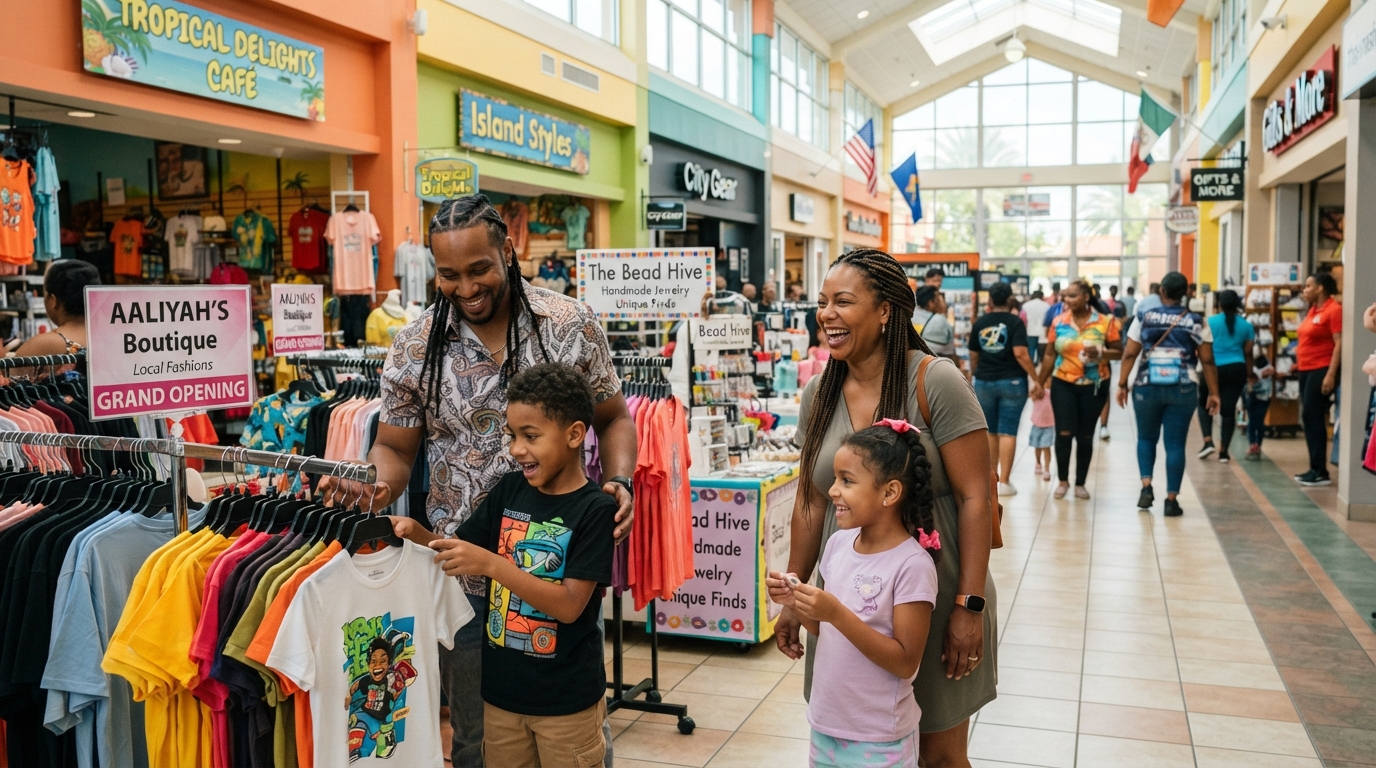
Come with friends or family, browse at your own pace, and choose what works for you. We can support local businesses without assuming every shop carries the same goods or services. Before making a special trip, check a shop’s current public listing for hours or offerings. A Google Business Profile is free and can show hours, photos, products, services, updates, reviews, and booking options.
Each business controls its listing, so details and availability depend on what that business shares. Reviews and stars can offer a sense of other customers’ experiences, but they do not guarantee yours. Use the information as a starting point, then make the choice that fits your plans. On your next trip, choose one local business to visit and make a purchase if it fits your needs.
How Can You Stay Steady Through Setbacks?
A setback is information about what needs attention, not proof that you should give up. Listen to customer feedback, adjust the offer, and ask peers for support when the next step feels unclear. From 1994 through 2022, 67.7% of new employer establishments survived at least two years. The share was 49.2% at five years, 33.9% at ten years, and 25.5% at fifteen years. These rates describe groups of new employer establishments, not any founder’s personal odds. They show why a business needs room to learn as customer needs shift.
AI is an optional tool, not a requirement for starting or running a business. Between September 2024 and August 2025, 7.6% of businesses used AI, compared with 8.2% of firms with fewer than five employees. Those adoption figures do not prove that your business needs AI. Use a tool only when it helps with a real task and fits your work.
Inc’s National Entrepreneurship Month event runs November 9-13, 2026, with sessions each day from 2:00 p.m. to 3:00 p.m. ET. It offers one way to explore ideas and hear from other business owners.
- November 9 covers growing a service business and smarter growth strategies. November 10 focuses on building a consumer packaged goods brand and using physical stores to drive growth.
- November 11 explores bringing innovation to market, plus the future of work, people, AI, and customer connection. November 12 includes a session on building a business that can outlast its founder.
- November 13 covers agentic AI in commerce and using AI in small businesses. Choose one practical action for this week and put it on your calendar.
Conclusion
You do not need every answer to take one thoughtful step toward an idea that matters to you. Courage often grows after you act, learn, and see how people respond. A venture can start small and stay close to the people it hopes to serve. Your family, neighbors, and local community can help you see needs with fresh eyes.
Choose a step that fits your time and energy. Write down the first person you want your idea to help, and let that be your next step!