
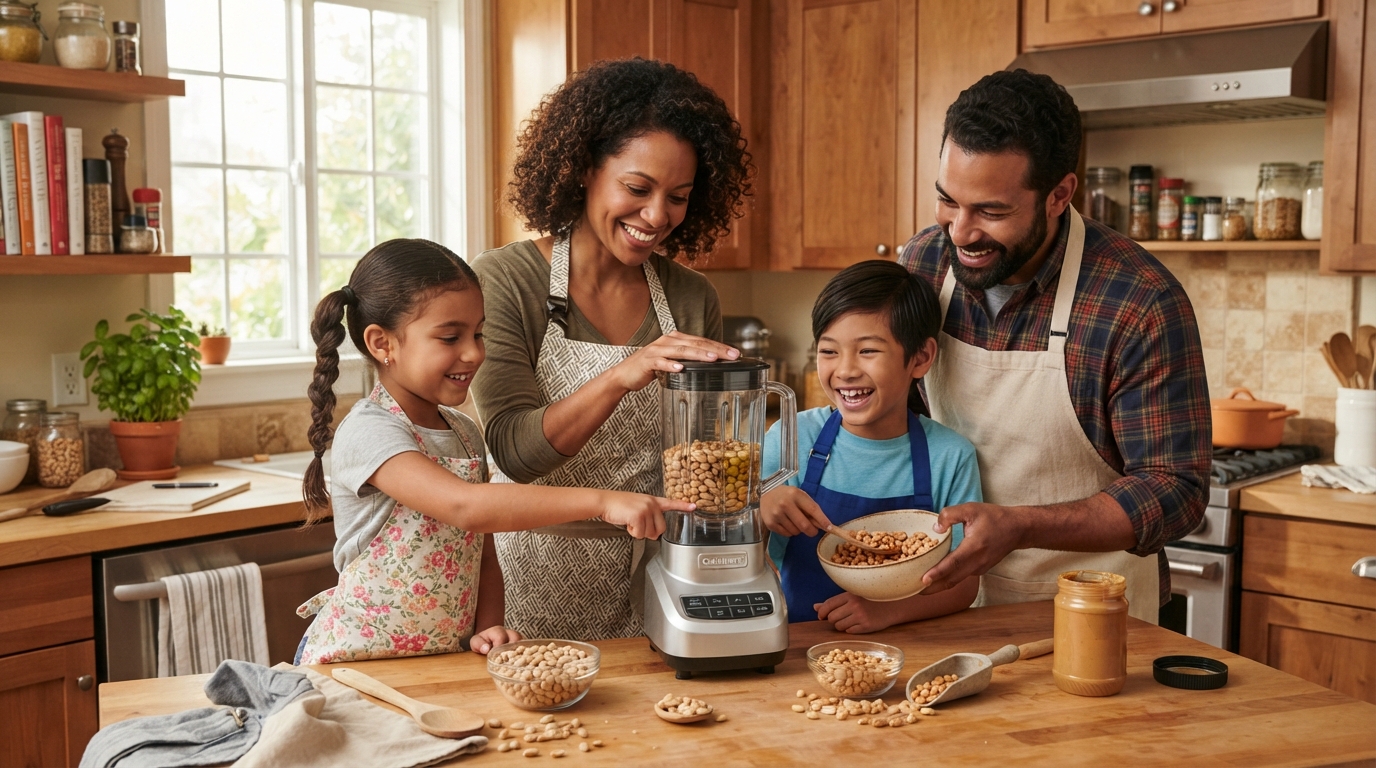
If a store-bought jar of peanut butter never quite matches your family’s taste, we can make a fresh batch at home. Visit Lauderhill Mall and shop together as part of your family celebration.
Blend dry-roasted peanuts until smooth, then add salt to taste for homemade peanut butter. We’ll share an easy recipe and ways to make the flavor fit your household.
National Peanut Butter Lovers Month is a fun excuse to gather local families around a small kitchen project. You can keep the spread simple or adjust it for those who like a little salt, sweetness, or crunch. With a few ingredients and the right appliance, you can make a fresh batch without much fuss. Bring everyone together for a small kitchen project that can be made to suit different tastes.
What Goes Into a Basic Peanut Butter Recipe?
For a small batch, peanuts are the only required ingredient, and salt is an optional extra. Peanut butter is essentially ground-up peanuts, so you can make it with just one ingredient.
Natural peanut butter means peanut butter made from ground peanuts, with salt or other additions included only if desired. Unsalted dry-roasted peanuts suit cooks who want to control the salt. Choose raw, unsalted, shelled peanuts if you plan to roast them yourself.
A simple peanut butter recipe also needs a food processor or high-powered blender and a clean jar. Two cups (299 g) of dry-roasted unsalted peanuts yield about 1 cup plus 2 tablespoons of homemade peanut butter.
- Dry-roasted unsalted peanuts
- Salt, if desired
- A food processor or high-powered blender
- A clean storage jar
Making homemade peanut butter can cost less when your peanuts cost less per finished amount than a similar jar. The comparison also depends on local prices and batch size, and it is more appealing if you already own the appliance.
Check the peanut package ingredients if you want a spread without added oils or sweeteners.
Should You Roast Peanuts Before Blending?
Roasting is optional, but a short oven toast helps raw peanuts release their oils and develop a deeper flavor. You can skip the oven when you start with roasted peanuts.
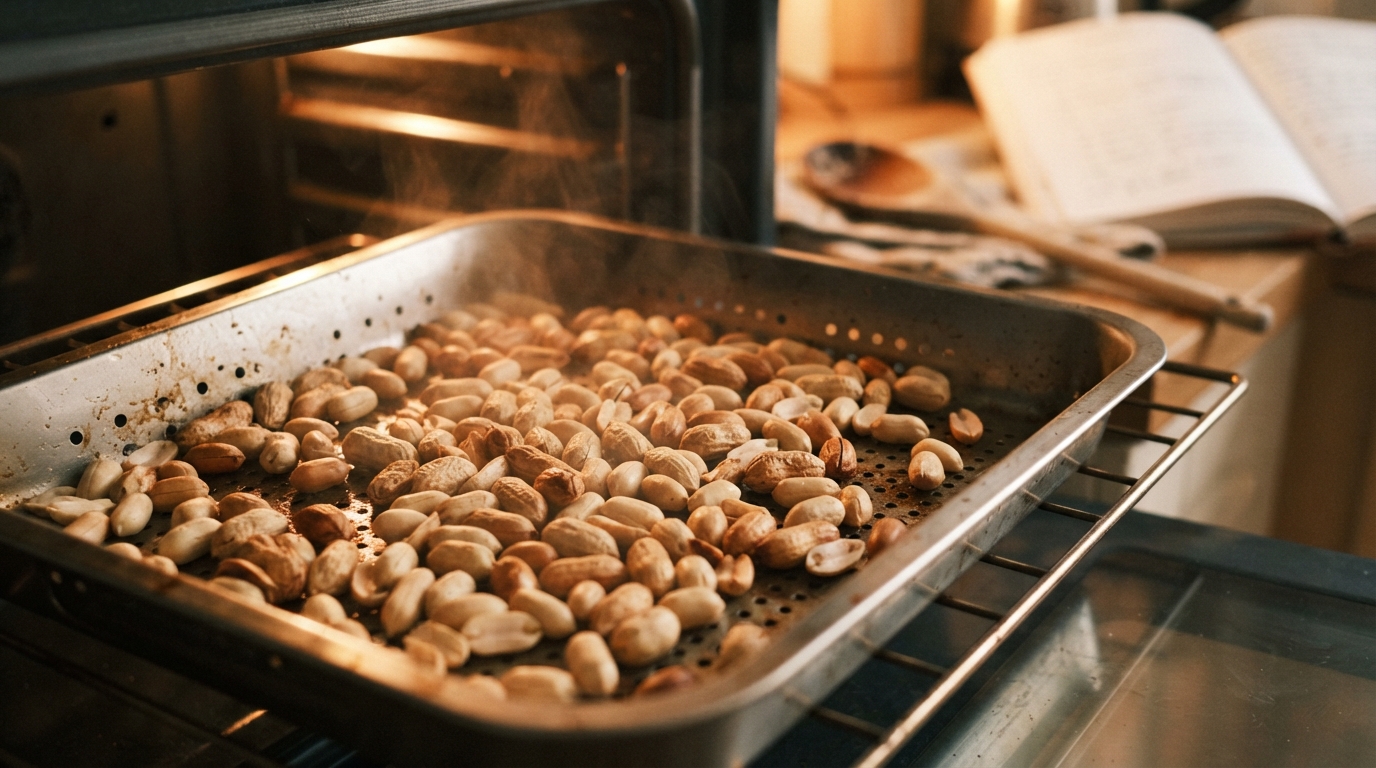
To roast raw, unsalted, shelled peanuts, spread them on a baking sheet and heat the oven to 350°F. Roast them for 10-14 minutes, until fragrant and light golden brown.
Watch the color near the end, since the nuts should look lightly golden rather than dark. Their warm, toasted scent is another sign they are ready. The oven step warms the nuts and brings out a fuller flavor. That added taste can make a plain batch feel richer without changing the recipe.
If you skip roasting raw peanuts, choose roasted, unsalted ones instead. About 1 tablespoon of oil can help loosen the spread if it seems too thick. Let freshly roasted peanuts cool on the baking sheet before they go into the machine.
How to Make Your Own Peanut Butter in a Food Processor, Step by Step
Put the peanuts in a food processor and keep processing through the crumbly and clumpy stages until the spread turns smooth. A food processor takes about 8 to 10 minutes, with pauses to scrape the sides and rest the motor.
Use a processor large enough for your batch. For reference, 3 cups of peanuts fit a 7-cup food processor.
- Add the peanuts to the food processor. Keep the bowl below its fill line.
- Process until the peanuts look like dry crumbs. Stop every 30 seconds to 1 minute, scrape the sides, and let the motor cool.
- Continue processing. The crumbs will form a dry, clumpy mass before turning creamy.
- Keep going until the mixture moves easily around the bowl. Taste it, then add salt if you like.
- Transfer the spread to a clean, sealed jar and refrigerate it.
The texture changes are easy to spot: first powdery crumbs, then thick clumps, then a creamy spread. Scrape peanuts from the bowl sides during pauses so they return to the blades. Give the motor those short breaks throughout the process, rather than running it without stopping. Store homemade peanut butter in an airtight container in the refrigerator for up to 1 month.
Stop when the mixture looks glossy and moves smoothly around the bowl.
Can You Make Peanut Butter Without a Food Processor or With a Blender?
A high-powered blender can make a smooth spread, while a food processor is the practical alternative when there is no blender. Start the blender on low, then switch to medium once the peanuts begin to turn creamy. Scrape the sides as needed so the peanuts keep moving toward the blades. A high-powered blender can make peanut butter in about 5 minutes, though the machine and batch may affect the time.
The blender can leave the spread warm and runny. Chill it for at least 8 hours or overnight, and it should thicken as it cools. If you want to make peanut butter without a food processor, a high-powered blender is a useful choice. If you need to make peanut butter using a blender, use the low-to-medium speed change and pause to scrape the bowl.
Without a blender, use a food processor instead. It can grind whole nuts with steady power, while hand-mashing cannot provide enough sustained grinding for a smooth nut butter. If neither appliance is available, choose a prepared spread or wait until you can use suitable equipment. Whole peanuts are too firm for hand-mashing to make a smooth result.
Stop using any appliance that strains or overheats instead of pushing it through the batch.
How Can You Change the Flavor and Texture?
A little honey or maple syrup can make a batch sweeter, but it can also make the spread firmer. Small changes let us tailor the flavor and texture to your household.
Try one of these simple options, then taste the batch before adding more:
- Reserve about 1/3 cup of peanuts, chop them, and pulse them in at the end for crunch.
- Add 2-3 teaspoons of honey or maple syrup for a gentle sweetness.
- Stir in 1/2 teaspoon to 1 tablespoon of cinnamon for warm spice.
- Try chocolate for a richer flavor, or add a pinch of salt to balance sweetness.
The honey and cinnamon amounts are options, not rules. Sweeteners can stiffen peanut butter, and an equal amount of oil can help loosen it again.
Natural peanut butter may separate, leaving oil on top. Stir the oil back in instead of draining it, since removing oil changes the spread’s texture.
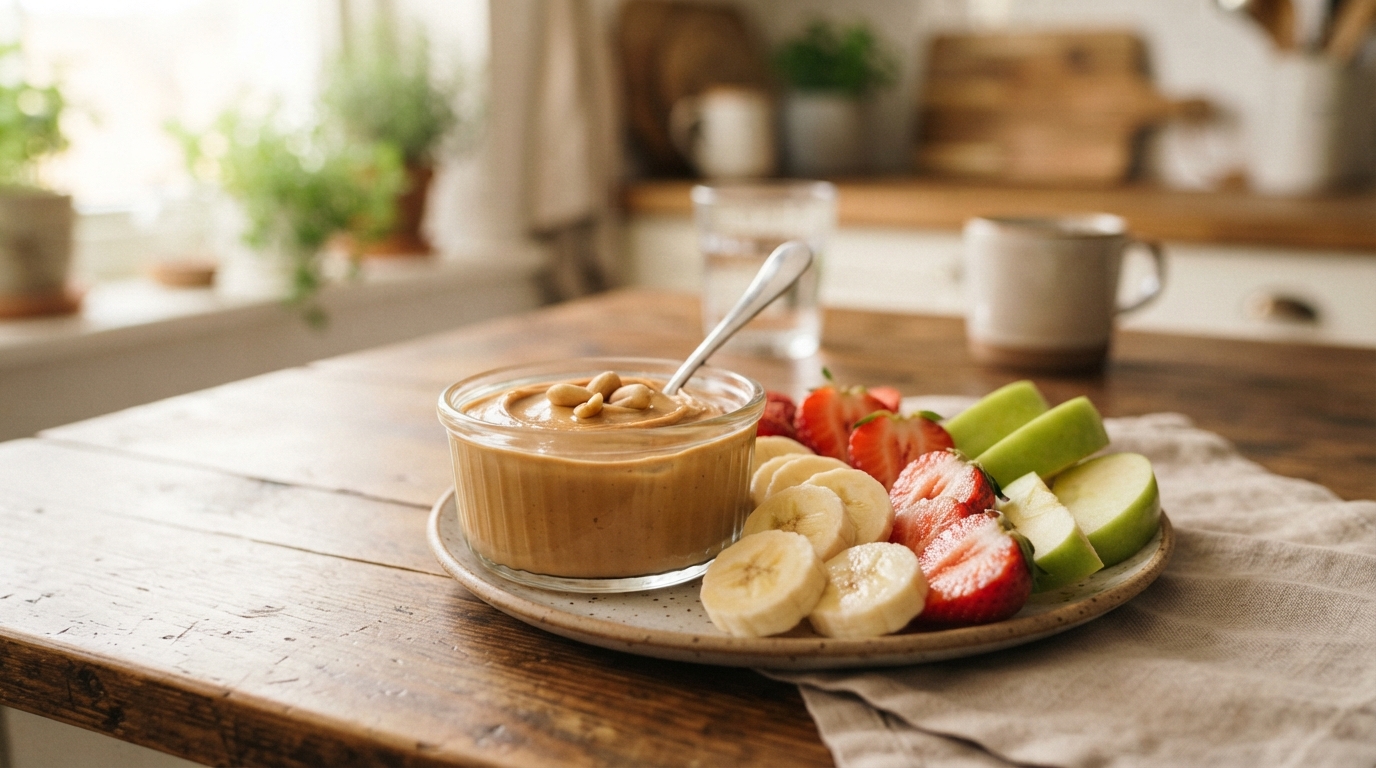
Serve the spread on toast, spoon it over oatmeal, or pair it with apple slices or banana. It also makes an easy sandwich filling for a shared snack.
For a shared snack, serve the add-ins on the side so everyone can choose a favorite.
Is Homemade Peanut Butter a Healthy Choice?
Peanut butter can fit into a balanced eating pattern, but its calories make portion size worth watching. A usual 2-tablespoon serving of natural peanut butter has 190 calories, 8 grams of protein, 16 grams of fat, 7 grams of carbohydrates, 3 grams of fiber, and 1 gram of sugar.
Natural peanuts and peanut butter contain no cholesterol. Still, peanut butter is calorie-dense, so a small portion matters when you enjoy it each day. Peanuts and peanut butter may support heart health, but peanut butter alone cannot promise to lower one person’s LDL. In the 2022 ARISTOTLE trial, 63 healthy participants followed their usual diets for six months, with one of three daily additions.
The additions were 25 grams of skin-roasted peanuts, 32 grams of peanut butter, or 32 grams of peanut-oil control butter. The skin-roasted-peanut group had lower total-cholesterol-to-HDL and LDL-to-HDL ratios than the control-butter group. The ratio results were p = 0.019 and p = 0.008. Those results describe the skin-roasted-peanut group, not a proven effect from the peanut-butter group.
A 2022 review of 11 clinical trials linked peanut intake with lower triglycerides. Another review found lower total cholesterol and LDL-to-HDL ratios among healthy peanut consumers than control groups. In people at high cardiometabolic risk, peanut interventions were linked with weight gain. That gain did not come with higher body fat or BMI.
A small daily spoonful can fit your eating pattern, but calories add up and personal needs differ. Anyone managing cholesterol should discuss personal food choices with a clinician.
Make a Family Day of It at Lauderhill Mall
A homemade food project can be the start of a fun family day out, too. After making peanut butter together, you can keep the family time going with a visit to Lauderhill Mall.
National Peanut Butter Lovers Month gives us a cheerful reason to celebrate familiar foods and time together. Plan a relaxed outing where everyone can shop and enjoy the community at their own pace. A mall visit can bring family members together across ages and interests. You might browse, share a meal, or simply enjoy being out as a group.
We welcome local families and community members to spend time together and support local businesses. Shopping close to home helps keep community connections strong. You do not need a special event to make the day feel meaningful. A little time to browse and talk can turn an ordinary outing into a shared memory.
Whether you come with children, relatives, or friends, there is room for everyone to enjoy a day together. Celebrate National Peanut Butter Lovers Month by pairing a home project with time out in the community. Plan a visit to Lauderhill Mall and enjoy a day of shopping and community time together.
Conclusion
A fresh homemade batch is a simple way to bring a little more choice to the family table. You can keep the flavor plain or adjust it to suit different tastes.
Start with one small version that sounds good to you, then share it with someone who might enjoy helping. A familiar food can become a happy kitchen moment when everyone gets a say.
Pick a day this week to make a small batch and share it with someone at home.