
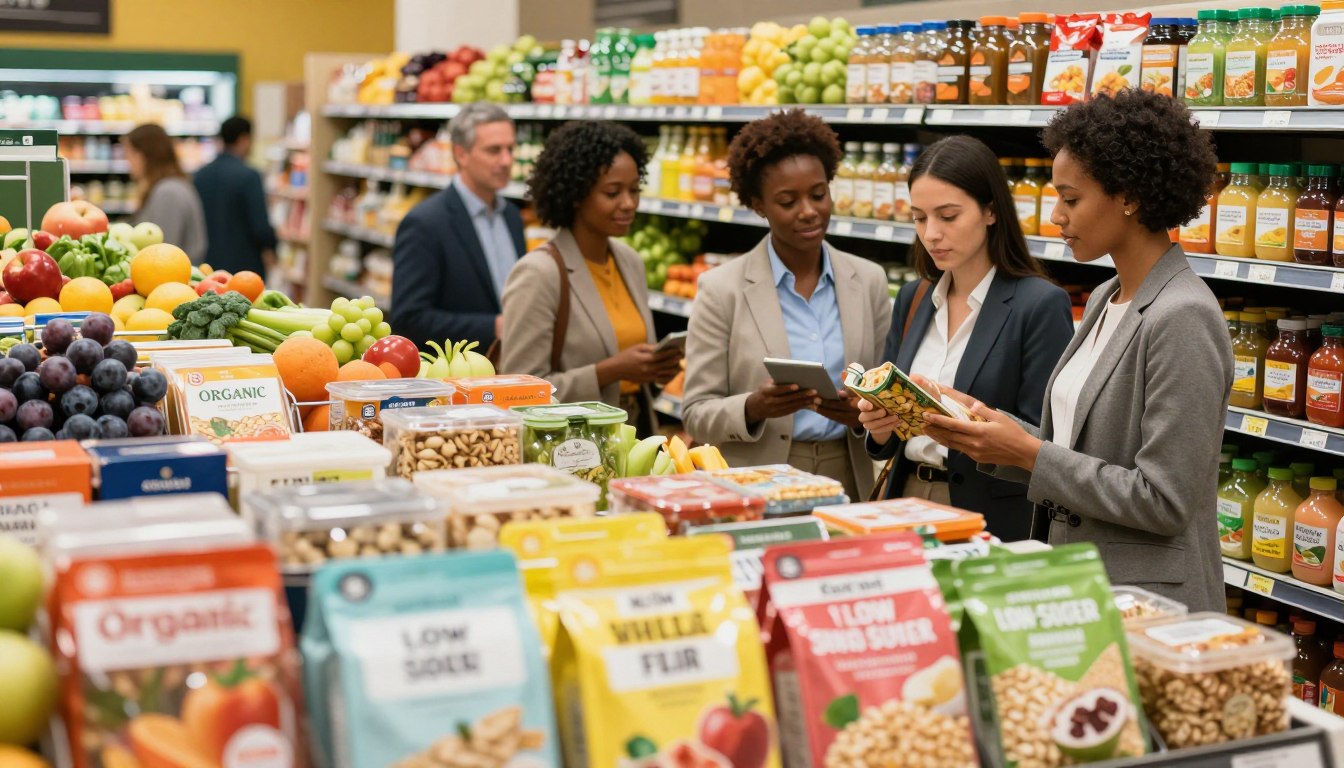
We all want to feed our families well, but grocery aisles can feel confusing. Tiny print, catchy claims, and hidden serving sizes make it hard to know what’s truly healthy.
Good news: reading food labels gives us clear nutrition guidance. The Nutrition Facts label is the backbone. It shows serving size, calories per serving, and amounts of key nutrients so we can spot nutrient-dense choices fast.
Serving size reflects what people typically eat — not a suggestion. Calories and nutrient numbers are per serving. Eat two servings and you double everything. The label also highlights what to limit, like saturated fat, trans fat, sodium, and added sugars, and what to get more of, like fiber, vitamin D, calcium, iron, and potassium.
The % Daily Value (%DV) helps us compare products: 5% DV or less is low; 20% DV or more is high. Remember, labels use a 2,000-calorie baseline, so our family’s needs may be different.
These simple reading food labels habits make family grocery shopping easier. With a little practice, we make smarter picks and support local shops that share our values.
Come see for yourself! Visit Lauderhill Mall for friendly grocery shopping tips, local vendors, and family-focused stores. We’re here to help our community find real, healthy food labels to look for and enjoy shopping together.
Healthy Food Labels to Look For
Shopping should be easy and caring. Look for clear labels like USDA Organic and Non-GMO Project Verified. These labels tell us about farming and processing. For less sugar, choose products labeled “No Added Sugar.” Remember, natural sugars are okay. For low sodium, pick items with 140 mg or less per serving. Gluten-Free is good for those with celiac disease.
Stronger claims like 100% Whole Grain mean more whole grain content. Terms like grass-fed and free-range suggest better animal care. Look for third-party certifications for animal welfare.
Be aware of front-of-package cues that make shopping easier. Bright icons and simple claims help. But, be careful with vague terms like natural or locally sourced.
- USDA Organic — no synthetic fertilizers, pesticides, or GMOs for the product type
- Non-GMO — no genetically modified organisms used, not the same as organic
- No Added Sugar — no sugars added during processing
- Low Sodium — 140 mg sodium or less per serving
- Gluten-Free — under 20 ppm gluten, regulated
- 100% Whole Grain — stronger whole grain claim
We check Nutrition Facts and ingredient lists too. These help us understand beyond the labels. Use labels as guides when choosing food for your family!
How to Read the Nutrition Facts Label for Smarter Shopping
First, check the serving size and how many servings are in the container. This helps you understand the numbers better. It's important to know this, so you don't get surprised by a package that has more than one serving.
Then, look at the calories. Make sure to note the calories per serving. If the label shows both calories per serving and per package, compare them. Dual-column labels make it easy to see how much you'll eat in one sitting.
Next, scan the nutrient list. Watch out for saturated fat, trans fat, sodium, and added sugars. These are things you should limit. On the other hand, look for dietary fiber, vitamin D, calcium, iron, and potassium. These are nutrients you should aim to get more of. Remember, serving size tips can help you adjust for family portions.
Use the %DV column to quickly judge. Choose lower %DV for nutrients to limit and higher %DV for nutrients you want more of. Keep in mind that %DV explained on labels is based on a 2,000-calorie diet. Adjust for your family’s needs when planning meals.
Also, note missing %DV values. Some nutrients, like trans fat and total sugars, may not list a %DV. Single-ingredient sweeteners such as honey might show added sugars differently; look for a dagger or footnote for details.
When deciding between options, compare food labels side by side. Pay attention to serving sizes and %DV explained for each product. Comparing labels helps you pick the best choice for your household. These simple checks make label reading fast and useful in the aisle. We keep shopping friendly and clear so families can make better choices!
What to Limit on Labels: Saturated Fat, Sodium, and Added Sugars
We want to share quick tips for shopping wisely. First, check the Nutrition Facts for saturated fat. Try to pick foods with unsaturated fats like olive oil or nuts. Also, be wary of “partially hydrogenated” ingredients, as they might contain trans fats, even if the label says 0 g.
Next, watch out for sodium. High sodium can lead to high blood pressure. Choose foods with lower %DV and compare brands side by side. Remember, one package can have more servings than you think, which can quickly increase sodium intake.
Added sugars are hidden calories. Look at the Added Sugars line under Total Sugars. Use %DV to guide you: 5% DV or less is good, 20% DV or more is high. Always pick the lower %DV option when comparing similar products.
- Scan for label red flags: “partially hydrogenated,” high %DV for saturated fat, sodium, or added sugars.
- Compare %DV across brands to reduce sodium and limit saturated fat effectively.
- Check serving size so you don’t unknowingly eat extra added sugars or sodium.
We make shopping easy: choose lower %DV numbers, go for whole foods, and swap sugary snacks for fresh fruit or plain yogurt. These habits are good for our hearts and keep meals balanced for everyone!
Beneficial Nutrients to Prioritize on Labels
We look for simple wins on every label! Choose products with a higher %DV for key nutrients. A quick look shows if a serving has 20% DV or more for important vitamins or minerals.
When shopping, focus on dietary fiber benefits. Fiber lowers cholesterol, keeps us full, and aids in weight management. Adults should aim for 25–34 grams daily. Opt for whole grains, beans, and high-fiber cereals.
Check the vitamin D calcium iron potassium line on labels. These nutrients are vital for bone health, preventing deficiencies, and controlling blood pressure. Fortified milk, leafy greens, lentils, and bananas are excellent choices.
- Choose items with 20% DV or more for fiber, vitamin D calcium iron potassium.
- Pick fruits, vegetables, whole grains, dairy or fortified alternatives for steady boosts.
- Select legumes and lean proteins to add iron and protein without excess calories.
Use %DV to compare similar foods. A higher %DV for fiber or vitamin D calcium iron potassium means a bigger contribution to daily needs.
We balance calories and taste while aiming for family nutrition. Small swaps at the store add up to real gains for our households!
Ingredient List Strategies to Spot Real Foods
We start by reading ingredient lists from top to bottom. The first three to five items usually make up most of the product. If sugar, salt, or refined grains sit near the top, we pause and reassess our choice.
Prefer products with simple ingredients that you recognize. Short lists with whole-food names like whole wheat, whole oats, or brown rice are best. If a label says enriched flour, it is less wholesome than whole grain first on the list.
Watch for hidden sugars names such as corn syrup, cane juice, maltose, fruit juice concentrate, and dextrose. These can hide under many labels, so learning common aliases helps us avoid sweet surprises.
We try to avoid additives when possible. Look for long chemical names or unfamiliar words. If you see many of them, choose a cleaner brand or a fresh option from a farmers’ market or a Lauderhill Mall vendor.
- Scan the first 3–5 ingredients.
- Pick short lists with whole-food words.
- Spot hidden sugars names and take note.
- Avoid additives and long, complex terms.
If a product is single-ingredient like honey or pure maple syrup, note how added sugars appear on blended labels. When unsure, compare two brands; simpler labels usually mean fewer surprises.
We use this strategy to support local producers who tend to sell less-processed options. Shop with intention and enjoy real food!
Decoding Marketing Terms: Organic, Non-Gmo, Natural, and More
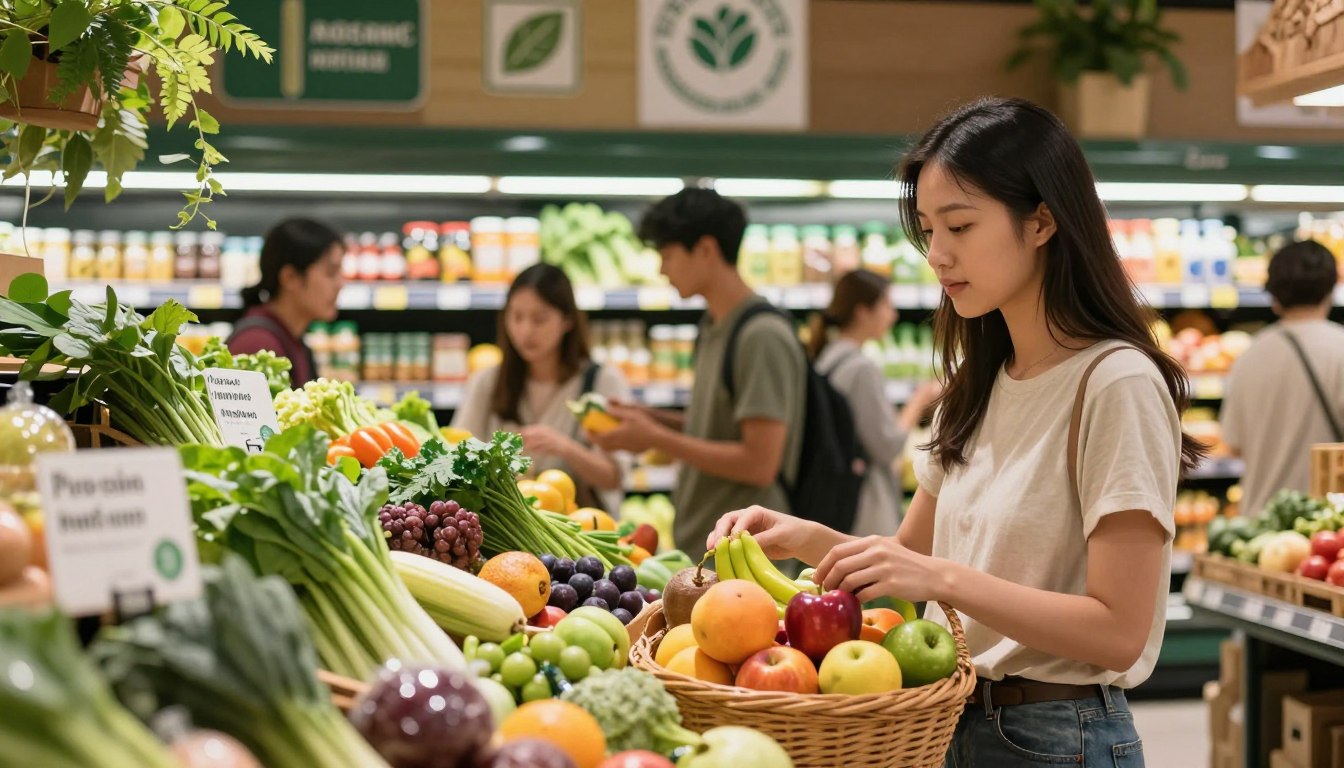
We aim to make shopping easy and honest. Look for the USDA Organic seal. It means the product is made without synthetic fertilizers, most pesticides, or GMOs. This seal is a reliable standard to follow.
Next, check for a non-GMO label. It shows the item was created without genetically modified organisms. While it's good to see, it doesn't replace the organic label or its strict rules.
Natural labeling can be confusing. Brands often use "natural" to mean fewer artificial ingredients or preservatives. But, "natural" has no strict definition from the government. So, always check the ingredient list to be sure.
Be cautious of claims like "made with whole grains" or "locally sourced." "100% whole grain" is a stronger claim. Terms like "grass-fed" and "free-range" suggest better animal care. Always trust third-party certifications when you can.
- Use labels as clues, not guarantees.
- Check the Nutrition Facts and ingredients for the full picture.
- Ask store staff or look for certified seals when in doubt!
These tips help us support local vendors at Lauderhill Mall and nearby farmers. We can shop with confidence, celebrate diverse foods, and keep our community thriving!
Front-Of-Package Claims and How to Verify Them
We all love the bright badges on food boxes and cans. They promise things like low fat, high fiber, or whole grains. These claims catch our eye at the store. We teach families to slow down and think before buying.
Turn the package over and check the Nutrition Facts and ingredient list. Use %DV to see if claims like "high in" are true. Also, compare serving sizes to fairly compare nutrition facts. Look for third-party seals for big health promises. USDA Organic and the Non-GMO Project seal mean something. Terms like gluten-free are easier to check.
Be careful of vague words like natural or healthy. They're not strictly regulated and might trick you. Teach kids and neighbors to check label claims before buying.
- Step 1: Read the Nutrition Facts for sugar, sodium, and fat.
- Step 2: Scan the ingredient list for whole foods first.
- Step 3: Seek third-party seals for truthful labeling.
Our aim is to shop smarter, supporting local stores and our budgets!
Special Label Formats and What They Mean for Shoppers
We explain label formats in a way that's easy for families to understand. Some packages have a dual-column label. This shows nutrients per serving and per package. It's useful when a snack or meal seems like one serving but actually serves the whole family.
When shopping, look for per package nutrition. It's key if you plan to eat the whole item. The per package nutrition column gives you the real numbers for calories, fats, and sugars. This saves you from guessing and keeps your shopping list accurate!
A single-ingredient sugar label might look different from mixed foods. Labels for pure honey, maple syrup, and table sugar show %DV for Added Sugars. They might also have a † footnote. Make sure to read that note to understand how added sugars fit into a 2,000-calorie diet.
Manufacturers might use different layouts approved by the FDA. We advise shoppers to look for a footnote that explains %DV and how values relate to daily needs. Even small differences in format can affect how quickly you find important information.
- Check both columns on a dual-column label when you might eat the whole item.
- Read the † footnote on a single-ingredient sugar label to see how added sugars count.
- Compare per package nutrition across brands to pick the best choice for your family.
We aim to improve label literacy so everyone feels confident when shopping.
Practical Label Comparison Methods in the Grocery Aisle

We make shopping easy with a quick method for every trip! First, check the serving size. Make sure the sizes match so you can compare fairly. This makes comparing labels straightforward and helpful.
Next, look at the %DV for nutrients. Choose lower %DV for bad stuff like saturated fat and sodium. Go for higher %DV for good stuff like fiber and vitamins. This helps us pick better for everyone.
Then, examine the ingredient list. Short lists with simple words are better than long, complex ones. Be wary of hidden sugars and any oils that start with "partially hydrogenated." These tips help us shop smarter and healthier.
- Check calories and protein to see which option fills up your family.
- Use dual-column labels to understand whole-package impact when available.
- Keep a 30-second checklist: serving size, calories, %DV for sodium/sat fat/added sugar, fiber, and top three ingredients.
These tips make comparing labels simple and stress-free. They're perfect for busy families rushing between school, work, and sports! Try them at Lauderhill Mall or your favorite store and share your success.
Tips for Special Diets and Label Reading for Allergies or Restrictions
We welcome families with special needs! Start by checking the ingredient list and the “Contains” statement. Look for common allergens like milk, eggs, soy, wheat, peanuts, tree nuts, fish, and shellfish.
For those with gluten sensitivity, look for gluten-free labels. The USDA and FDA say a certified gluten-free claim means less than 20 ppm of gluten. So, scan labels for these words to find safe options.
When shopping for vegan or kosher items, read ingredient lists carefully. Be on the lookout for hidden animal products like whey, gelatin, and certain colorings. Look for certified vegan, kosher, or halal seals for extra confidence.
- Compare %DV to manage added sugars or sodium. A quick side-by-side tells you which brand fits your family best.
- Don’t rely only on protein %DV. It can be listed differently and may not tell the whole story.
- Ask store staff about cross-contact practices and brand sourcing if you remain unsure.
We suggest special diet shopping with a calm plan: make a short list, scan labels, compare two or three options, and pick the most transparent brand. This keeps shopping efficient and safe for everyone.
FAQ
What healthy food labels should we look for when grocery shopping?
Look for USDA Organic for produce and packaged goods. This means they're grown without harmful chemicals. Choose “100% Whole Grain” over “made with whole grains.” Non-GMO labels mean no genetically modified organisms were used.For animal products, terms like grass-fed or free-range can be helpful. But look for third‑party certification. “Low Sodium,” “Gluten‑Free,” and “No Added Sugar” are regulated or specific claims worth trusting when present. Always pair these cues with the Nutrition Facts and ingredient list for the full story!
How do we quickly read the Nutrition Facts label for smarter shopping?
Start with serving size and servings per container. This way, you know what the numbers mean. Check calories per serving and per package if available.Scan nutrients to limit (saturated fat, trans fat, sodium, added sugars) and nutrients to get more of (dietary fiber, vitamin D, calcium, iron, potassium). Use the % Daily Value (%DV): 5% or less is low; 20% or more is high. Remember the label is based on a 2,000‑calorie diet, so adjust for your family’s needs.
Why are saturated fat, sodium, and added sugars highlighted on labels?
Saturated fat and excess sodium are linked to heart disease and high blood pressure. Added sugars add extra calories and can crowd out nutrient‑dense foods. The label separates added sugars from total sugars so you can compare products.Focus on saturated fat amounts. Avoid trans fat entirely (watch for “partially hydrogenated” in the ingredient list). Choose lower %DV for these nutrients.
Which nutrients should families prioritize when reading labels?
Prioritize dietary fiber, vitamin D, calcium, iron, and potassium. Fiber supports fullness and heart health; vitamin D and calcium support bones; iron prevents anemia; potassium helps blood pressure. Look for higher %DV (20% or more) for these nutrients.Choose whole foods like fruits, vegetables, whole grains, dairy or fortified alternatives, legumes, and lean proteins to boost intake.
What strategies help us use the ingredient list to spot real, minimally processed foods?
Read the first three to five ingredients — they make up most of the product. Prefer short, recognizable ingredient lists and whole‑food names. Watch for added sugars under many names (corn syrup, cane juice, dextrose, fruit juice concentrate).Look for whole grains listed first (whole wheat, whole oats) instead of enriched flour. If sugar, salt, or refined grains are near the top, consider a simpler option.
How do common marketing terms like “organic,” “non‑GMO,” and “natural” differ?
USDA Organic meets federal standards and carries the USDA seal. Non‑GMO means no genetically modified organisms were used but isn’t the same as organic. “Natural” is vague and not strictly regulated.“Locally sourced” and “made with whole grains” can vary by brand. Use regulated seals and the ingredient list to verify claims instead of relying on bright front‑package language.
Can we trust front‑of‑package claims, and how do we verify them quickly?
Front badges are meant to catch your eye but don’t tell the whole story. Flip the package to check Nutrition Facts and the ingredient list. Use %DV to judge claims like “high in” or “light.”Compare serving sizes across products. For health or allergy claims, look for credible seals like USDA Organic, Non‑GMO Project, certified gluten‑free, kosher, or halal.
What are dual‑column or other less common label formats and why do they matter?
Dual‑column labels show nutrients per serving and per package for items often eaten in one sitting. Single‑ingredient sweeteners like honey or maple syrup may show Added Sugars differently and sometimes include a † footnote. Alternate formats are permitted by the FDA; always check for a footnote that explains %DV and how the values relate to a 2,000‑calorie diet so you know true intake if you eat the whole package.
What’s a fast, practical way to compare products in the grocery aisle?
Use a 30‑second checklist: match serving sizes, compare calories, check %DV for sodium, saturated fat, and added sugars (lower is better), and look for higher %DV of fiber and key vitamins/minerals. Scan the top three ingredients for simplicity and watch for hidden sugar names or “partially hydrogenated” oils. This quick method helps busy families make smarter choices fast.
How can label reading help people with allergies, intolerances, or special diets?
Check the ingredient list and the “Contains” statement for common allergens (milk, eggs, soy, wheat, peanuts, tree nuts, fish, shellfish). Gluten‑free claims are regulated (under 20 ppm). For vegetarian or vegan diets, look for certified seals or scan for animal‑derived ingredients.For halal or kosher needs, seek credible certification marks. When unsure, compare brands and ask store staff for help.
How can we use label knowledge when shopping at Lauderhill Mall to support local vendors?
Start at specialty shops and ask vendors about sourcing and preparation. Use Nutrition Facts and ingredient lists on packaged items sold in kiosks or stores. Look for USDA Organic or third‑party seals on products that claim organic or better animal welfare.Apply the 30‑second checklist to quick food court picks and chat with staff about added sugars, sodium, and cooking methods. Shopping this way supports local businesses and celebrates cultural diversity!